


How to Cite
Keywords:
simulation, fabrication, digital to physical, textiles, transformative designAbstract
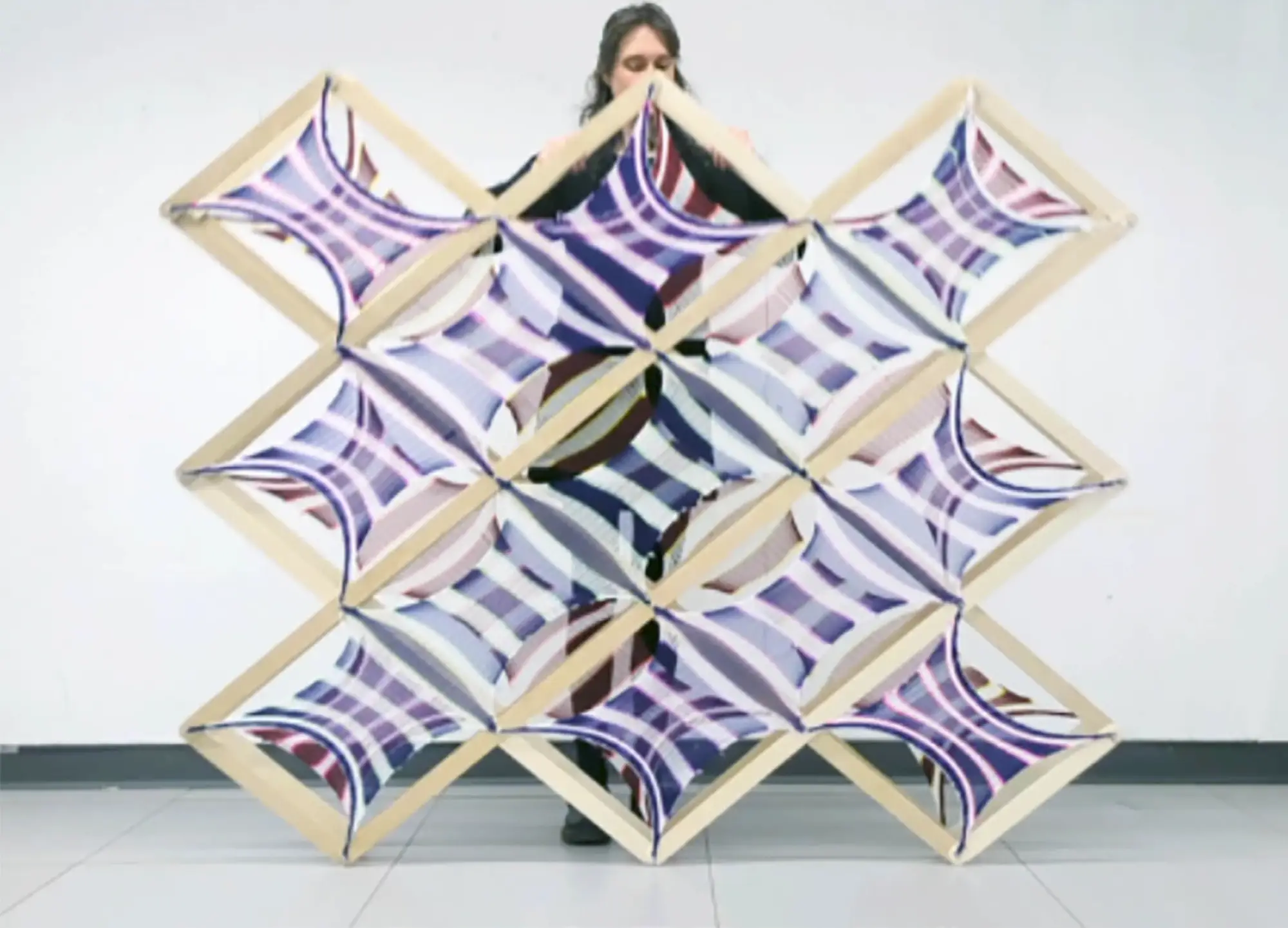
As architecture faces demands for adaptability, transformable design offers vital strategies for dynamic spatial configurations. This research explores the integration of knitted textiles with transformable scissor grids to create collapsible architectural walls. By utilising the elasticity of knitted materials, the project optimises expansion and retraction of the surface membranes, enhancing adaptability. Digital simulations are used to predict the textile behaviours and informed he material development and patterning. The final design incorporates two offset scissor grids, adding depth and dynamic interplay between colour and pattern. Using nylon yarns and nylon-covered elastic yarns created a range of elastic responses, enabling the membrane to stretch and contract with the transformable grid whilst maintaining tension. This integration enhanced the visual expression of movement, allowing colours and patterns to shift during transformation. The study demonstrates how knitted membranes can infill scissor grids creating enclosure, providing stability, whilst enabling dynamic, responsive surfaces for adaptive architectural design.
References
Friedman, Y. (1975). Pro Domo. Actar.
Hoberman, Chuck. 1990. Transformable Structures and the Art of Folding. Industrial Designers Society of America.
King, Phil. 1988. Tents: Architecture of the Nomads. Thames & Hudson.
Mathews, Stanley. 2006. Cedric Price: From Radical Architecture to Radical Pragmatism. Routledge.
Negroponte, Nicholas. 1975. Soft Architecture Machines. MIT Press. DOI: https://doi.org/10.7551/mitpress/6317.001.0001
Otto, Frei. 1973. Tensile Structures. MIT Press.
Picon, Antoine. 2018. The Materiality of Architecture. University of Minnesota Press.
Popescu, Mariana. 2019. “Knitted Formwork for Complex Concrete Structures.” Architectural Design 89 (5): 34–39.
Sabin, Jenny. 2017. Lumen: A Responsive Textile Environment. Museum of Modern Art.
Thomsen, Mette Ramsgaard. 2015. “Textile Logics in Architecture: Computation and Craft.” Journal of Textile Design Research and Practice 3 (2): 153–69.


